
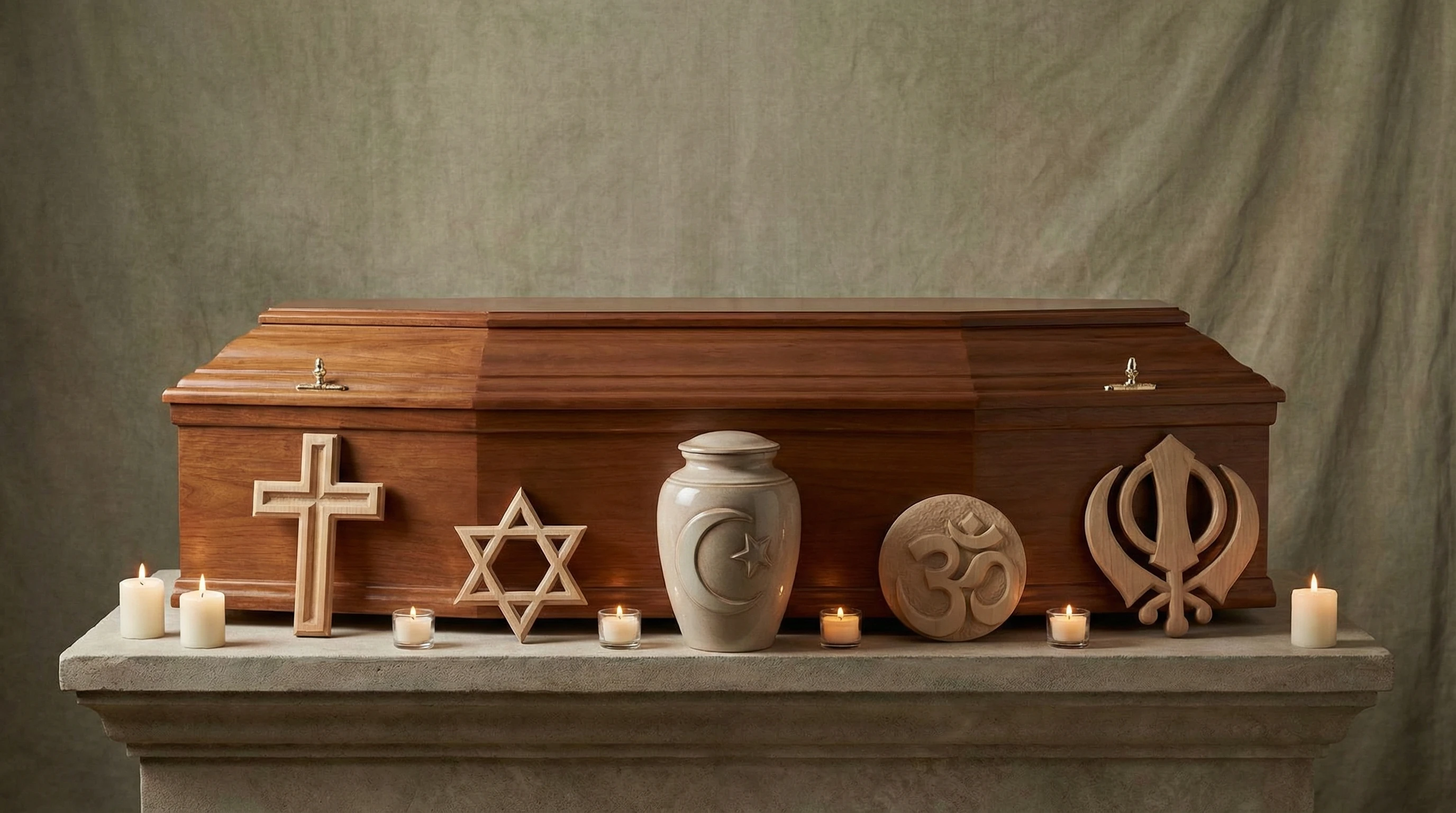
If you’ve ever started looking into funeral planning but felt unsure about how religion ties into the whole process, you’re definitely not alone. A lot of people aren’t sure what their faith expects, or how tradition and personal wishes fit together, especially once the costs of everything start piling up.
My own family had a pretty eye-opening experience with this a few years ago. We always thought we’d do things by the book, but after some sticker shock at the funeral home and a lot of heated debates about what was most important, we learned just how much both money and religion can pull funeral decisions in different directions.
Religion shapes a lot of what people assume about funerals, especially when it comes to choosing between burial and cremation. At the same time, the high costs in the U.S. and Canada mean that even people with really strong beliefs sometimes end up making compromises. Here’s a breakdown of how faith traditions often guide funeral choices, why people go a different way, and how there are ways to honor beliefs without breaking the bank.
How Religion Influences Funeral Choices
Almost every major faith has something to say about what happens to a person’s body after death. For many families, those teachings are the main reason they pick burial or cremation, or feel really torn about the decision.
- Judaism: Traditional Jewish law says that the body should be buried whole, usually within 24 hours. Cremation is pretty much off the table for Orthodox and Conservative Jews, and even many Reform Jews prefer burial. Scriptural reasons underpin this, like respect for the body and a belief in bodily resurrection.
- Islam: Burial is the standard in Islam. Cremation is not an option according to most Islamic scholars, and families are expected to bury the deceased as soon as possible. The body is washed, wrapped in a simple shroud, and laid to rest, usually without a casket unless required by law.
- Catholic and Orthodox Christianity: For a long time, both branches were strongly against cremation. The Roman Catholic Church loosened up in the 1960s, saying cremation is allowed as long as it’s not chosen for reasons against Christian teachings. The Orthodox Church still wants burial to be the main practice, with cremation generally frowned upon.
- Protestant Christianity: Protestants are usually more flexible. Most mainline denominations leave the decision up to families, so both burial and cremation are common. Local custom and family tradition often play a big role.
- Hinduism: Cremation is the norm for most Hindus; actually, it’s required in many traditions. The ritual burning of the body is seen as a release for the soul, helping it on its adventure to the next life and breaking the cycle of reincarnation.
- Buddhism: There’s no single rule in Buddhism. Cremation and burial are both done, depending on the country and tradition. For many Buddhists, cremation fits with beliefs about impermanence, but it’s not strictly required.
- Sikhism: Like Hinduism, Sikhism prefers cremation. It’s the accepted practice for most Sikhs and burial is less common.
Why People Sometimes Go Against Their Religious Traditions
The cost of funerals is a huge reason people choose cremation these days, even if their religion prefers burial. A traditional burial in the U.S. can easily cost $7,000 to $10,000 or more, mostly because of the casket, burial plot, embalming, and funeral home fees. Cremation usually ends up costing less than half that, and sometimes, much less.
I’ve seen families wrestle with this exact issue. Even when someone really wants to honor their faith’s burial traditions, seeing the prices and realizing the financial burden it could put on relatives sometimes changes their mind. For some, a simple cremation with a memorial service feels more manageable and humane.
Other reasons for choosing cremation over burial include:
- Living far away from a family burial ground or community cemetery
- Wanting to keep things simple; less planning and fewer logistics
- No local religious community to support traditional practices
- Feeling disconnected from childhood faith, even if the family was religious
- Environmental concerns, as some people think cremation is easier on the planet than traditional burial practices
Some people also realize that when there’s less community support or connection to tradition, preferences shift. There’s also the practical reality—geography, finances, and personal beliefs all come into play. And with climate change on many people’s minds, ecofriendly options like green burials or biodegradable urns appeal to those who want to honor both their values and the environment.
Which Religions Encourage Burial and Which Accept Cremation?
Some religions are pretty clear: burial is the only way. Others allow both options, or strongly encourage cremation.
- Religions Rigid About Burial:
– Orthodox Judaism
– Most branches of Islam
– Eastern Orthodox Christianity
These groups generally see cremation as disrespectful to the deceased and their traditions. - Religions That Overwhelmingly Pick Cremation:
– Hinduism
– Sikhism
For these faiths, cremation isn’t just accepted—it’s the preferred or even required way to handle remains. - Religions with More Flexibility:
– Catholic Christianity (with some guidelines)
– Protestant Christianity
– Buddhism
Families here have more options, and cultural norms often make a bigger impact than strict religious rules.
How Funeral Cost Drives People’s Decisions
A huge part of modern funeral decision-making comes down to money. Cremation’s lower cost is a big reason its popularity keeps rising, even among families whose faith leans heavily toward burial. For families dealing with sudden loss and little savings, spending $10,000 or more on a funeral just isn’t doable.
But here’s the surprise many people miss: most of a burial’s cost comes from the casket and funeral home fees. If you buy a casket directly from a supplier—sometimes called “eliminating the middleman”—you can save thousands. Federal law in the U.S. says funeral homes have to accept any casket you buy on your own. That means if keeping with religious traditions matters, you can still plan a burial, often at a much lower cost than you’d expect.
Once my family figured this out, it was a turning point. We shopped for a simple, affordable casket online, arranged the rest ourselves, and realized honoring our beliefs was still within reach. More people would probably stick with their faith’s traditions if they knew about these cost-saving options.
Finding the Right Balance Between Belief and Budget
No two families handle funeral planning the same way. Sometimes, tradition is the top priority; sometimes, cost wins out. Most often, it’s a mix—doing what feels right spiritually, emotionally, and financially.
- Check with faith leaders about what your religion recommends and what is actually required. You might have more wiggle room than you think.
- Talk with your family about what’s most important, and what everyone can realistically afford.
- Shop around. There are direct casket suppliers and discount options online that can make a big difference in the final price.
- Ask funeral homes for itemized price lists. Don’t feel pressured to buy more than you want or need.
No matter your faith or background, honoring your beliefs while managing costs is possible. Careful planning and knowing your options can help you make choices that feel both supportive of your traditions and doable for your family, no matter what you believe or how much you have in savings.