
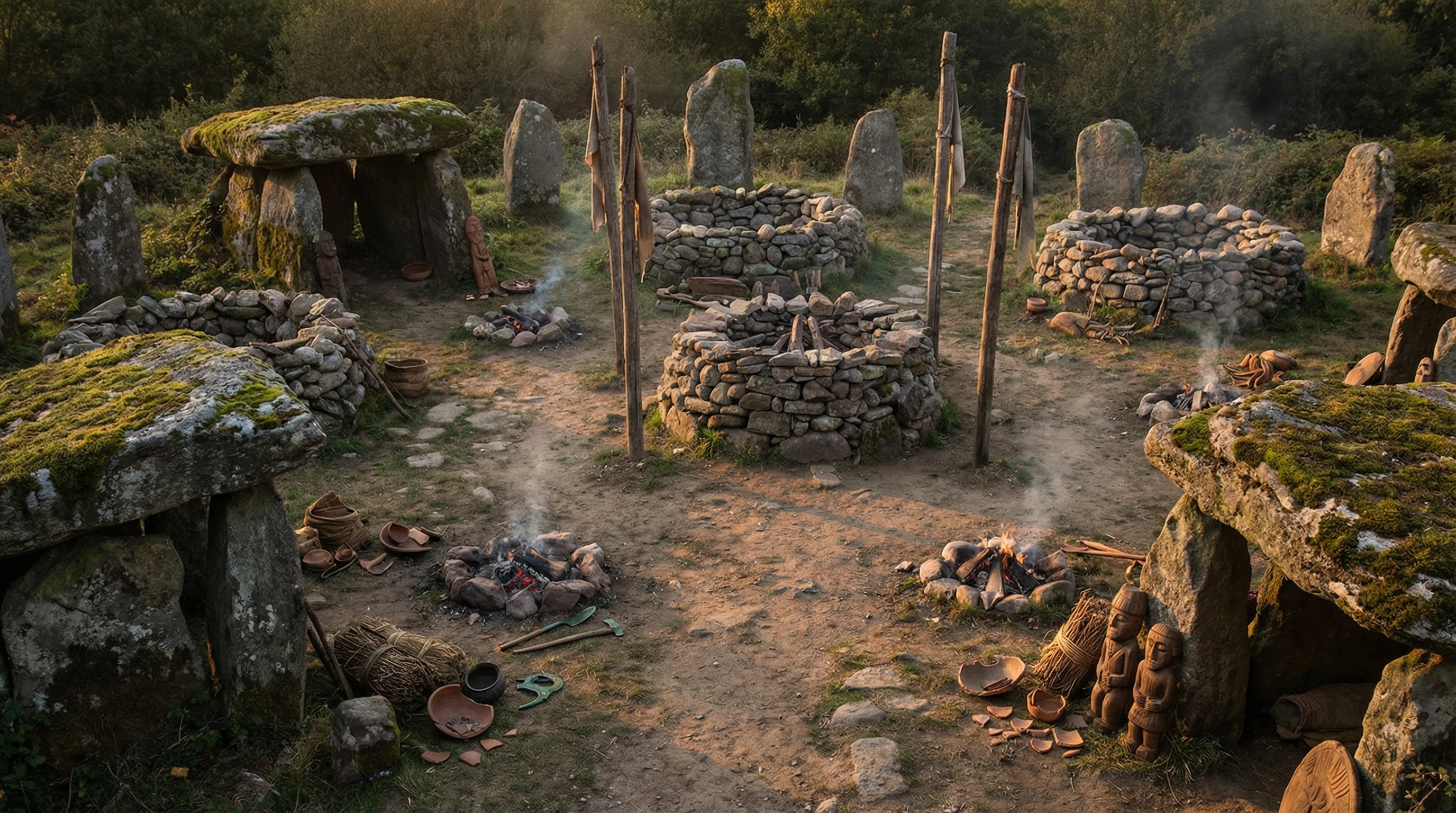
If you’ve ever wondered why funeral and cremation ceremonies show so much variety around the world, you’re not alone. The way we honor those who’ve passed away is deeply tied to ancient history, cultural traditions, and personal beliefs. Learning about the history of burials and cremations gives a whole new perspective on how people approach these major life moments.
For me, checking out this topic revealed just how much these rituals connect us to our ancestors, and how personal choices today still echo ideas and beliefs from thousands of years ago.
The First Burial and Cremation Rituals: Looking Back to Prehistoric Times
Funeral practices actually reach far into the Stone Age. Archaeologists have found graves well over 100,000 years old, like those at the Qafzeh and Skhul caves in Israel, where modern humans carefully buried their dead. There are even older Neanderthal sites, such as Shanidar Cave in Iraq, showing intentional burials over 60,000 years ago (Smithsonian Magazine). These findings show that, from the start, people cared about honoring loved ones and marking their passing in some way.
- Burials often included tools, shells, or flowers, so even ancient people may have believed in some form of afterlife or wanted to show the importance of the individual.
- Cremation appears a little later, with the earliest finds in Australia from roughly 23,000 years ago (see: research by C.C. Lampert, Australian Archaeology, 1981).
It’s really interesting that many prehistoric burials show signs of ceremony, such as arranging the body, adding artifacts, or using ochre pigment. Even then, these weren’t just practical acts but rituals packed with meaning for those left behind.
Why Burial or Cremation? The Role of Religious Beliefs
The choice between burial and cremation has pretty strong ties to religious and spiritual views. Different cultures formed their own beliefs about what happens after death and how the body should be treated.
- Ancient Egypt: Mummification and elaborate tomb burials connected to powerful beliefs in an afterlife. Egyptians thought preserving the body guaranteed a safe passage.
- Ancient Greece and Rome: Both burials and cremations were popular, but at different times. Greeks used cremation for honored warriors, while Romans practiced both, tying burial location and style to laws and customs (Britannica).
- Christianity: Like the Jewish tradition, Christians preferred burial, inspired by the burial of Jesus and beliefs in bodily resurrection. The Bible mentions famous burials, such as Abraham’s family tomb and Jesus’ own tomb (Genesis 23; John 19:41-42).
- Hinduism and Buddhism: Cremation is usually preferred, seen as the quickest way to release the soul from the body and encourage spiritual progress.
Religious beliefs still influence what’s most popular in different cultures even now. For example, Orthodox Jews and Muslims both strongly prefer burial, while in India, cremation is much more widely practiced due to Hindu doctrines.
It’s interesting to notice how philosophies about life after death can steer funeral choices. In some societies, the hope for a spiritual next stage makes cremation or burial a way of helping loved ones on their way. Sometimes, the need to keep ancestral land ties strong is a key reason traditional burials stay valued.
Milestones and Changes in Funeral Traditions Through Time
These traditions don’t stay the same. They’ve mixed things up a lot over time. In Europe, cremation faded out as Christianity spread, since church teachings usually supported the burial of bodies. But during the 19th and 20th centuries, attitudes toward cremation began to relax across many places. This happened partly for practical reasons, like crowded cities running out of burial space (National Center for Biotechnology Information).
- The first modern crematorium opened in Milan, Italy, in 1876.
- In the U.S., the first crematorium appeared in 1876 in Pennsylvania. Cremation rates stayed low until the late 20th century, when personal freedom and a more secular approach helped the rates climb.
People make choices about funerals based on a mix of tradition, availability, environment, and faith. For example, in Japan, high population density made cremation the main method for most of the 20th century, even though it’s anchored in old Buddhist customs. In some urban areas, families have to flex on older traditions because of space and changing beliefs.
Funeral and Cremation Ceremonies: What Makes Them Meaningful?
No matter which method is used, nearly every culture attaches some special meaning to the ceremonies. Sometimes it’s about guiding the person’s spirit or showing love and respect. Other times, the ceremony centers on the community, helping the living support each other during tough times of grief.
- Burial Ceremonies: Gravesite rituals, prayers, or celebrations are common. In many places, graves become sites for future visits, helping families keep a connection to their heritage and lost loved ones.
- Cremation Ceremonies: Families might keep ashes in urns, scatter them in significant places, or even make them part of memorial jewelry or stones.
From my own experience, the differences I’ve noticed at funerals really highlight how the shape of the ceremony reflects what people value or believe about life, death, and whatever comes next.
Modern Adaptations: Funerals in Today’s World
Today, globalization and changing beliefs are starting to shake up funeral practices. In the U.S., cremation has become way more popular. That’s in part because it’s usually less expensive, and some see it as a more ecofriendly option compared to traditional burials (Cremation Association of North America).
- In several parts of Europe, cremation now makes up the majority of funerals.
- Traditional burials are still treasured by many in Africa, the Middle East, and Latin America, and links with ancestral lands plus religious views help keep these customs alive.
Technology is also stepping into the picture. Virtual funerals, green burials, and creative memorials are all rising trends. These changes are making funeral traditions more personal and innovative than ever before—custom-fit to honor each person’s unique story and connection to their community.
Some people now choose ecofriendly burials that use natural materials and protect the local landscape. Others are holding virtual memorials so friends and relatives across the globe can pay their respects, no matter where they are. Memorial jewelry, online tribute pages, or even living memorials like planting a memorial tree are becoming new ways to remember and honor loved ones, showing how traditions keep growing alongside our changing world.
Key Takeaways About the History of Funerals and Cremation
- The earliest evidence of funerals dates back at least 100,000 years, showing that honoring the dead is one of humanity’s oldest customs.
- Religious beliefs and spiritual ideas have always shaped whether cultures usually bury or cremate loved ones, and both approaches are tied to hopes and fears about the afterlife.
- Modern practices still connect with old traditions, but economic factors, environmental concerns, and personal beliefs play a bigger role than ever before.
Checking out how people have handled death through the ages and across cultures shows that funeral and cremation ceremonies are about much more than just dealing with the body—they’re about the ways we build meaning, remember, and help each other heal. Bottom line: these rituals are a powerful link between our past, our present choices, and our hopes for the future.
You did a great job turning what could be a really heavy, taboo subject into something digestible and genuinely informative — I was impressed by how engaging and respectful the history of funeral and cremation ceremonies felt from start to finish. I’m curious: was there a particular tradition or fact that surprised you the most when you were researching this topic? That kind of personal reflection would spark even more conversation. Overall, it’s a thoughtful, well-written piece that makes a difficult subject interesting and accessible!
Thank you for the positive feedback; I appreciate it. I did find the trend towards Eco-friendly caskets very interesting; I was not aware that they were available no less trending. My personal experience really opened my eyes to the Funeral Home (“The MiddleMan”) mark up on Caskets and the rest to the services they offer.