When planning a funeral, one of the most personal decisions I make is choosing between a metal or wood casket for burial. This choice affects not just the look, but also the cost, durability, and how the casket impacts the environment. As someone who cares about making informed choices, I want to share a thorough, fact-based comparison to help others who are considering their options. This guide covers everything I’ve learned from the most recent studies and articles, with sources linked throughout for easy reference.
Introduction to Metal vs. Wood Caskets
Metal caskets and wood caskets are the two main options available in North America today. Each style has its own look and practical benefits. Metal caskets are usually made from steel, stainless steel, copper, or bronze, while wood caskets are made from hardwoods like oak, cherry, mahogany, or pine. The Federal Trade Commission lists both types as standard choices in U.S. funeral homes (FTC).
How Popular Are Metal and Wood Caskets?
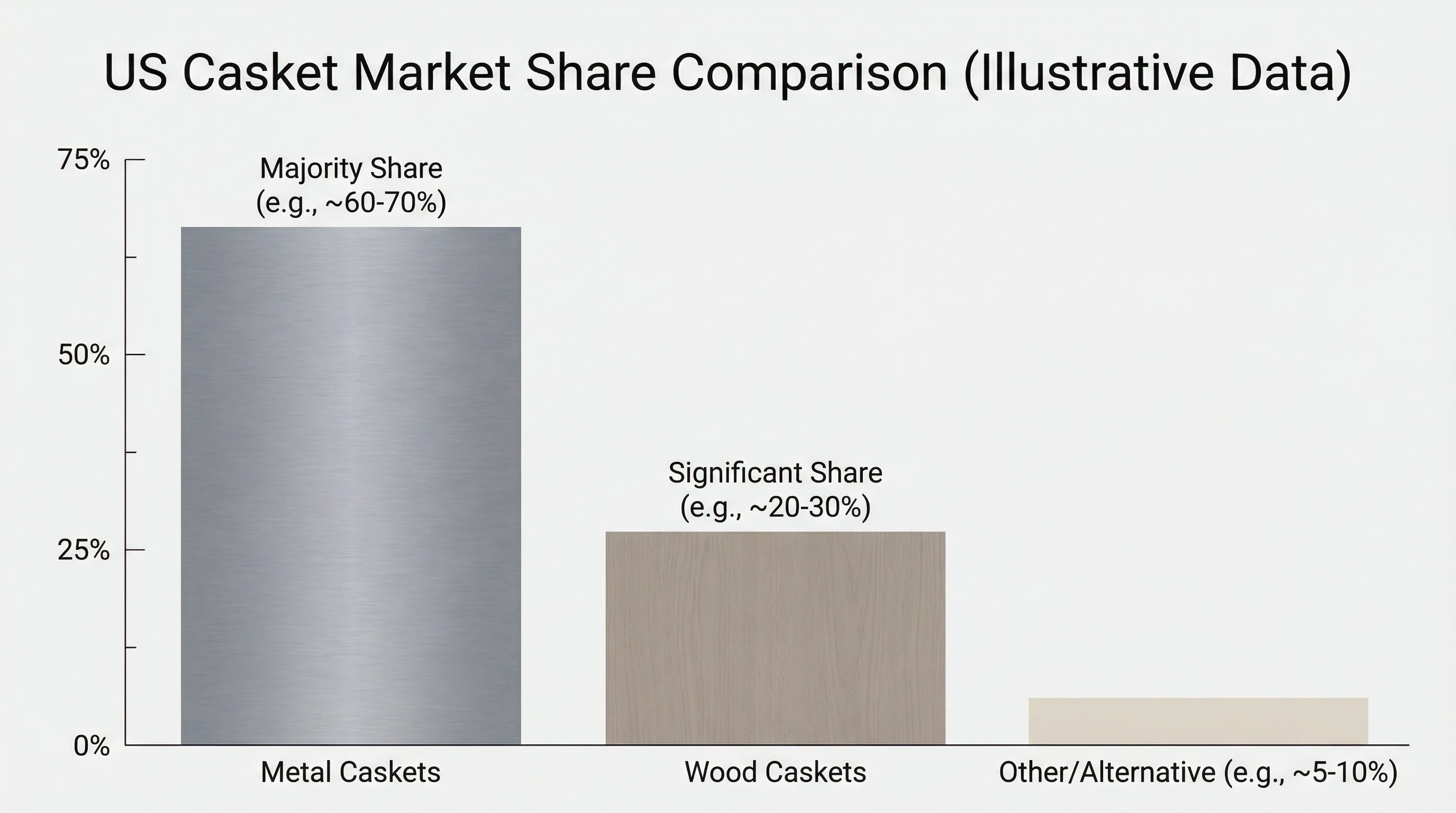
According to recent data from NFDA 2023 Funeral Facts, metal caskets account for about 60 to 65% of all casket sales in the United States, while wood caskets make up about 35 to 40%. The chart above shows the market share split. Many families choose metal for its strength, while others select wood for its classic and natural appearance. Recently, I’ve seen more families weighing these reasons as they try to balance tradition, durability, and budget concerns when picking what feels right for their loved one.
Reasons People Choose Metal Caskets
Durability and Perceived Longevity
One of the main reasons I hear for choosing a metal casket is the belief that it provides more long-term protection. Metal caskets, especially those made from stainless steel or copper, are less likely to degrade quickly compared to wood. People often see features like gasketed seals or protective liners as extra barriers against the elements (Casket Questions 2023). This sense of extra security is often reassuring for those who want the remains of their loved ones to have enhanced protection underground.
Appearance and Customization
Metal caskets usually come in a wide range of colors and finishes, including brushed or polished metal. Many families appreciate the chance to select custom colors and details that reflect the preferences of their loved one. Custom handles, intricate engravings, and personal emblems can also give a more tailored look to the casket, matching the unique personality of the deceased.
Price Range for Metal Caskets
The average price I’ve found for a metal casket is about $2,500 to $5,000, with stainless steel models often costing more, sometimes $7,000 and up for premium or custom models (US Funerals Guide 2024). If price is a major concern, basic 20-gauge steel models can cost less, starting around $1,200. The additional features, like the type of metal and peace of mind about strength, can justify the extra spending for some people. Comparing these numbers helps families make the best choice for their budget and priorities.
Resistance to the Elements
Copper and bronze caskets are even more resistant to rust and corrosion than steel. Some families are comforted by the idea that the casket will hold up for a long time, especially since many cemeteries require burial vaults (NFDA). This longevity in the face of tough conditions often makes metal caskets a solid pick for families seeking peace of mind about their loved one’s resting place.
Reasons People Choose Wood Caskets
Natural Look and Traditional Appeal
Many people in my experience want a casket with a warm, handcrafted feel. Wood caskets can be simple or ornate, depending on the wood type and finish. They are often chosen by families who prefer a more classic or rustic style. Some also feel that wood better reflects the unique character of their loved one. The appeal of a naturally textured, beautiful finish or a rich woodgrain gives wood caskets a timeless look that many find comforting.
Range of Prices and Materials
Wood casket prices vary a lot depending on the wood used and how much handcrafting goes into the design. Pine caskets start around $1,000, while mahogany or cherry can reach $4,000 to $6,000. On average, a hardwood casket costs about $2,500 to $4,000, based on recent price lists from Lincoln Heritage and Parting 2024 Guide. Families can find options for almost any budget, from simple engineered wood to premium hardwood selections with detailed craftsmanship.
Environmental Impact and Green Funerals
For those concerned about the environment, I’ve noticed wood caskets are gaining in popularity. Biodegradable wood choices, especially those without metal parts or chemical finishes, break down more naturally after burial. Some families prefer wood to reduce their ecological footprint (Green Burial Council). This ecofriendly option appeals to those committed to green practices and reducing their impact on the planet, as more cemeteries set aside dedicated spaces for green or natural burials.
Simple and Personalized Styles
Wood caskets can be finished with carvings, personalized hardware, and fabric linings. Some are finished only with natural oils, while others have glossy stains or extra details. I often find that religious and cultural traditions also play a role in choosing wood over metal. For example, Jewish burials usually use plain pine caskets and shun unnecessary embellishments, while other groups may prefer a more decorated appearance.
Comparing Cost: Metal vs. Wood Caskets
Cost often plays a big part in my decision between metal and wood caskets. The latest studies show both have a wide price range, but metal caskets are usually a little more expensive than wood on average. According to Parting.com (2024), steel caskets are the most popular and average between $2,500 and $5,000. Hardwood caskets average $2,500 to $4,000, while simple pine and engineered wood caskets can be less (Lincoln Heritage).
Cost matters a lot because it affects not just the family’s budget but also which features or materials are most important. Some people decide to balance cost and quality, going with a midrange casket, while others prioritize look, durability, or Eco friendliness. It’s helpful for families to carefully compare their options and ask funeral providers for price lists to avoid surprises during a difficult time.
Other Factors That Influence Choice
- Religious and Cultural Traditions: Some groups prefer wood due to burial practices, while others have no preference.
- Personal Values: Environmental values, beliefs about simplicity, and desired appearance play a part.
- Funeral Home Availability and Selection: The selection at local funeral homes can guide the decision. Some providers have many metal options, while others feature mostly wood, and there are many reputable companies selling direct to the consumer online with phone support and delivery guarantees.
- Biodegradability: Those focused on natural burial often favor wood. Metal caskets may not be allowed in some green cemeteries.
Pros and Cons of Metal and Wood Caskets
Metal Caskets
- Long-lasting and resistant to rust if made of copper or bronze
- Available in many colors and finishes
- Usually more expensive
- Heavier, which can affect transportation and handling
Wood Caskets
- Classic and natural look that feels warm and traditional
- Offers more ecofriendly, biodegradable options
- Prices range widely based on wood and craftsmanship
- Will decompose over time, even in a burial vault
Choosing Which Fits Your Needs Best
When comparing metal and wood caskets, I focus on what matters most for the person and their family. If durability and appearance are top priorities and a higher price is acceptable, metal might fit better. If a natural look, environmental values, or lower cost appeal most, wood is an easy choice. Careful research and knowing current average prices helps buyers make decisions that reflect both their needs and their values. No matter which material you prefer, take your time, ask questions, and pick the option that brings the most peace of mind during a challenging moment.
Sources: NFDA, Parting, Lincoln Heritage, Casket Questions, Green Burial Council