 Burying a loved one or choosing cremation is a deeply personal decision, but cost often plays a big role. With funeral expenses on the rise, knowing how these costs break down between burial and cremation is crucial for budgeting and peace of mind. As people explore their options, financial considerations become just as important as personal wishes or traditions.
Traditional burials and cremations have each seen changes in popularity and pricing over recent decades. Understanding what goes into each choice helps families make decisions that respect both their values and their budget. In this article, I’ll spell out the average costs, share market trends, and explain how consumer choices are shifting in the US so you feel prepared for these important decisions.
Burial vs. Cremation: What Does Each Cost?
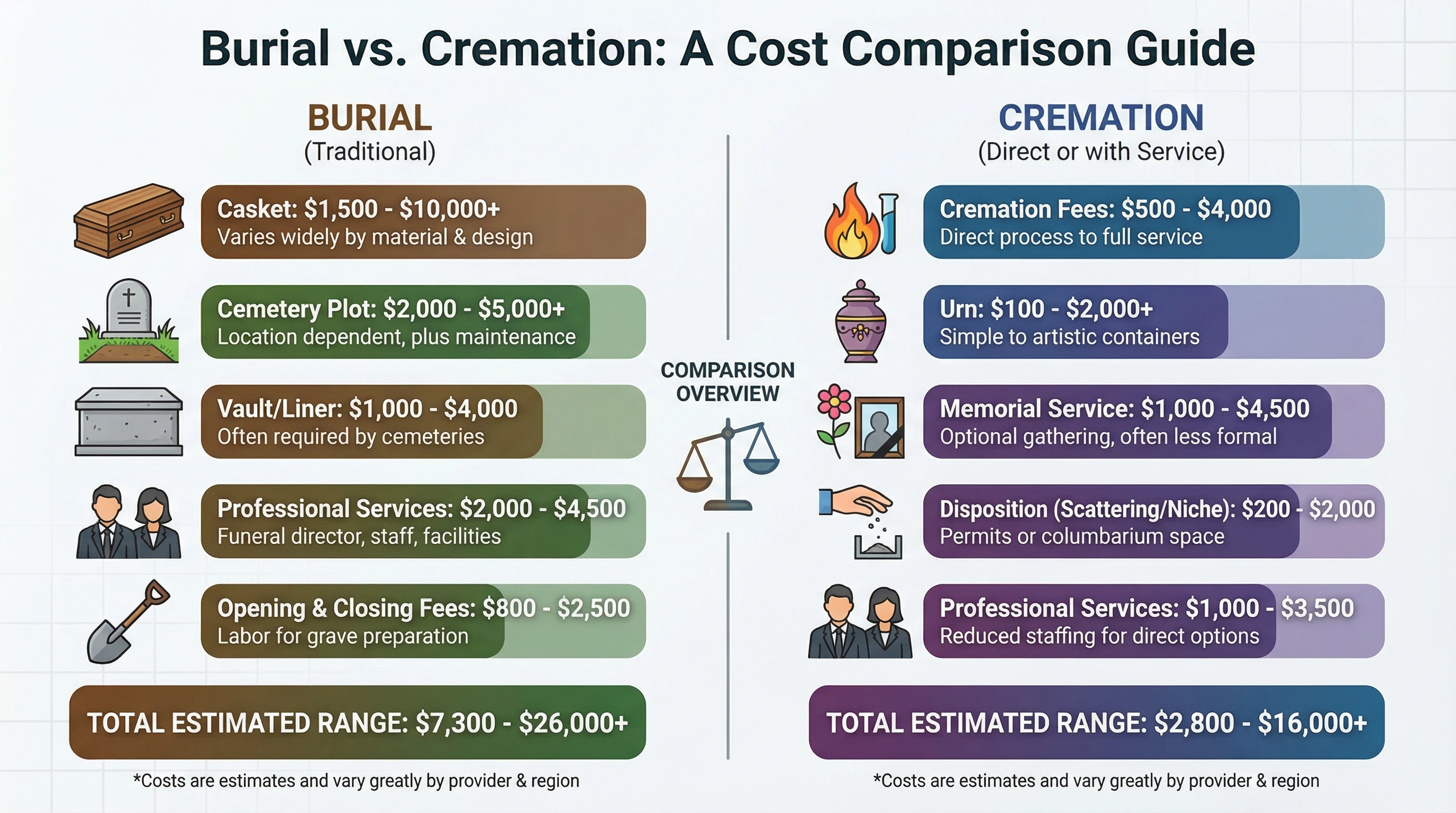
Burial and cremation offer different types of services, and each comes with its own set of expenses. Let’s check out exactly what goes into both options, so you have a clear idea of how the costs stack up.
Average Costs for a Traditional Burial
- Casket: Caskets are usually the most expensive part of a burial. Prices range from $2,000 up to more than $10,000 for certain models, but most people spend about $2,500 to $3,500.
- Funeral Home Services: Staff services, transport, and planning fees average $2,000 to $2,500.
- Cemetery Plot: The price for a burial plot depends on location, but nationally the typical cost is $1,000 to $4,000. Urban cemeteries can be much higher.
- Headstone or Grave Marker: A standard headstone is typically $1,500 to $5,000. Custom monuments or specialty stones can make the price go up further.
- Other Fees: Fees for opening and closing the grave, vaults or liners, and other extras usually total $1,500 to $2,500.
When you add it up, the median cost for a full-service funeral with burial in the United States is about $8,000 to $10,000, according to the National Funeral Directors Association (NFDA). In areas with higher living costs, that total can be over $15,000.
Average Costs for Cremation
- Cremation Fee: Direct cremation (with no funeral service included) generally costs $1,000 to $2,500.
- Cremation Casket or Container: You don’t need a fancy casket for cremation. Most people use a simple container, ranging from $200 to $1,000, sometimes included in package pricing.
- Funeral or Memorial Service: Many families choose to hold a service, which can add $2,000 to $4,000 but is completely optional.
- Urn: Standard urns start at $75 and go up to $500, with some custom designs costing more.
On average, the median cost for a funeral with cremation, including a service, usually falls between $6,000 and $7,000. Direct cremation with no extras can be less than $2,000 in lots of communities.
Trends Over Time: Burial and Cremation in the US
The funeral industry in the US has seen some dramatic changes over the past 20 years. When you look closely at the numbers, the shift becomes clear.
Cremation Has Become More Common
- 2003: About 28% of all US deaths ended with cremation.
- 2013: Cremation rates jumped to about 46%—meaning almost half of Americans were choosing this option.
- 2023: The cremation rate has reached roughly 60%, according to reports from the NFDA and Cremation Association of North America.
More families today prefer cremation because it’s usually less expensive, more flexible, and can even address environmental concerns. Industry experts predict that by 2040, nearly 80% of funerals in the US will be cremations.
Burial Rates Have Declined
- 2003: Burial accounted for about 72% of funerals.
- 2013: Burial’s share dropped to about 48%.
- 2023: Now, traditional burials are chosen in just under 40% of US funerals.
This steady switch up is fueled partly by the higher expenses of burial and changing views about traditions. While religious faith and culture are still big factors, more families simply want options that fit their finances and schedules.
What Influences Funeral Costs?
Lots of factors affect how much families end up paying for burial or cremation. Location, services selected, and personal choices all matter.
Geography
Costs can vary dramatically from region to region. For example, burial plots in large cities like New York or San Francisco might reach $10,000, while smaller or rural communities often offer plots for less than $1,500.
Type of Service
Full funerals with viewings, high-end caskets, and additional ceremonies can make the price go up. On the other hand, simple or direct options—like immediate burial or cremation with no extras—keep the expenses lower for both choices.
Personal Touches and Extras
Extras such as floral displays, slideshows, extra transportation, and other personalized touches can quickly add up. It’s easy to see your final bill climb, so it’s helpful to focus only on the extras that really matter for you and your family.
Straightforward Ways to Save
After checking out the options, there are some practical steps to keep costs manageable no matter which route you go:
- Pick direct cremation or immediate burial, which skips the viewing and full formal service. These options come with much smaller price tags than standard funerals.
- Price shop for funeral homes and cemeteries. It’s your right to ask for price lists ahead of time. Take advantage of this to compare and plan your budget.
- Find caskets, urns, or grave markers from third-party sellers. Federal law lets you do this, and it often means saving hundreds or even thousands compared to funeral home prices.
- Only include extras and personal touches that are truly meaningful to you. Nearly all add-ons are optional and can be skipped to step up your savings.
Market Breakdown: Who Chooses What?
According to recent data from the NFDA, your choice between burial and cremation can depend on age, location, and tradition. Older generations and families in the Midwest and South usually go for burial, while younger adults and those living on the West Coast or in larger cities tend to choose cremation. Religious beliefs or ethnic background also play a significant role in decision-making.
No matter which direction the trends are heading, most people want choices that are affordable, flexible, and honor their loved ones without breaking the bank.
Putting Cost in Perspective
Burial and cremation are both meaningful ways to remember a loved one—but the costs mount up quickly for either option. Over the past two decades, cremation rates have grown fast as more people look for wallet-friendly and flexible choices. Meanwhile, burial prices continue to climb thanks to increased land demand, material costs, and service fees.
Planning ahead, talking with family members, and being proactive about comparing prices can save you from unwanted surprises. Asking plenty of questions and prioritizing what matters most ensures your plans line up with your wishes and your budget. The best tribute is the one that feels right and doesn’t create added stress for those you care about most. Start these conversations early so you can make confident choices when the time comes.